Seated Spinal Movement
Educational content about seated back movements. This involves placing hands on knees and alternating between arching and rounding the spine. Movement should be slow and comfortable.
Educational information about movement programs for workplace environments
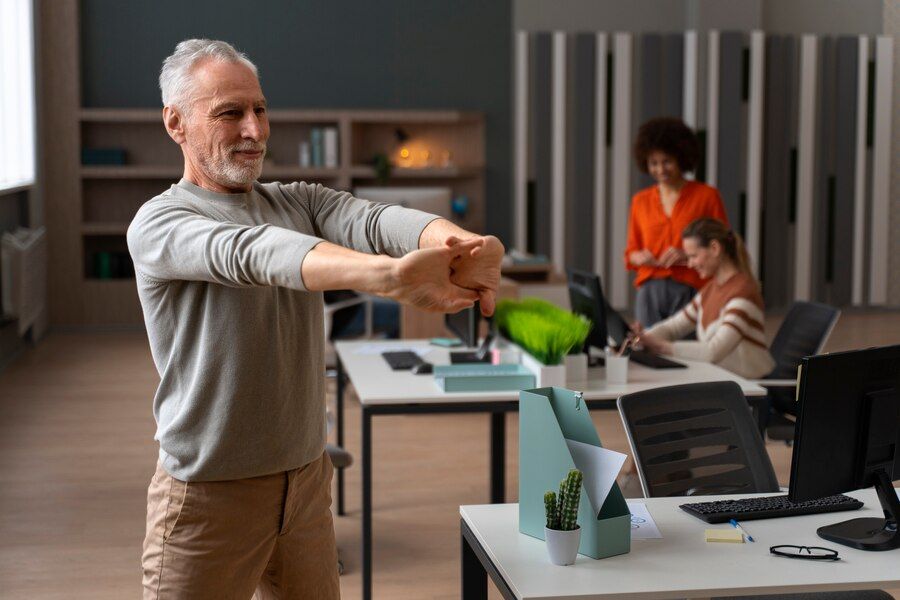
Educational content about structured workplace movement
This educational resource provides information about frameworks for incorporating physical activity into work routines. Each program described is designed for office settings with minimal space requirements.
Programs can be adapted based on available time, space, and individual preferences. This content is informational and educational in nature.
Consistency is often more significant than intensity when establishing movement habits. A brief program practiced regularly may be more sustainable than ambitious plans that are difficult to maintain.
Individuals may choose programs that fit current schedules and energy levels, adjusting as circumstances change over time.
Information about a short program for busy workdays
Educational content about seated back movements. This involves placing hands on knees and alternating between arching and rounding the spine. Movement should be slow and comfortable.
Information about standing movements using a chair. This involves standing in front of a chair and lowering as if to sit, then standing back up. This engages leg muscles without requiring floor space.
Educational content about inclined push movements using a desk edge. Individuals place hands on the desk edge and step back to perform push movements at an angle. The angle can be adjusted for comfort.
Information about calf raises. This involves standing behind a chair for balance and rising onto toes, then lowering back down. This simple movement activates lower leg muscles.
Educational information about a longer break option
Information about beginning with walking. This could involve walking around the office, using stairs, or walking outside if weather permits. A comfortable pace that allows conversation is suggested.
Educational content about arm and shoulder movements. This may include arm circles, shoulder movements, and chest stretches. Focus may be placed on areas that feel tense from desk work.
Information about leg and hip movements. This may include standing leg swings, gentle lunges, and hip circles. A desk or wall may be used for balance support if needed.
Educational content about conscious breathing. This involves sitting or standing comfortably and focusing on slow, steady breaths. This may help with transitioning back to focused work.
For those new to workplace movement, beginning with a brief program once daily may be appropriate. As this becomes comfortable, some individuals add additional sessions or try longer programs.
Progress occurs at individual paces. There is no requirement to advance to longer or more frequent sessions unless that serves personal preferences.
Some people find it helpful to note when they complete a program, using a calendar or journal. This may provide a sense of accomplishment and help identify patterns.
Focus on consistency rather than perfection is often suggested. Missing a day does not mean starting over; individuals simply resume when ready.
All programs described can be completed in the space around a standard desk. Access to a private office or meeting room may provide additional options for movement.
These programs are designed for completion in typical work attire. Individuals may choose movements that feel comfortable given what they are wearing on any particular day.
Some people schedule programs during natural breaks, such as before lunch or between meetings. Morning sessions work for some individuals, while others prefer afternoon movement.
Educational Purpose: All materials and information presented on this website are for educational and informational purposes only. The content does not constitute medical advice, diagnosis, or treatment. Individuals should consult qualified healthcare professionals before making changes to their health routines, particularly those with existing health conditions.