Shoulder Movements
Information about gentle shoulder rolling motions. This involves moving shoulders in circular patterns, which some people incorporate as part of their morning routine.
Educational information about incorporating movement during work
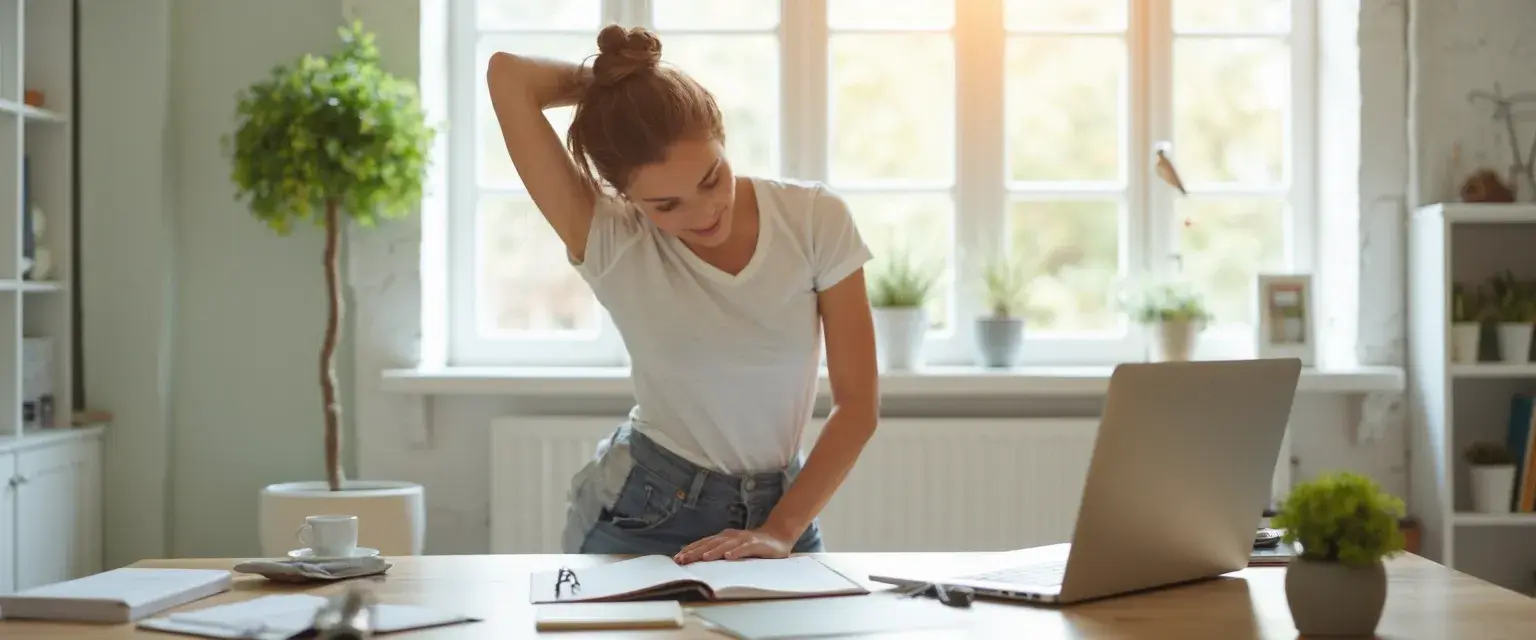
Understanding physical activity in work environments
Extended periods of sitting are common in modern work settings. This educational resource provides information about movement practices that may be considered during the workday.
The routines described are designed to be brief and accessible, requiring no special equipment or dedicated exercise space. This information is educational in nature.
Movement practices may serve as transitions between tasks. The information provided explores various approaches to incorporating physical activity into work routines.
The content is intended as general information rather than personalized guidance. Individual circumstances vary, and what works for one person may differ for another.
Information about starting the workday with gentle movement
Information about gentle shoulder rolling motions. This involves moving shoulders in circular patterns, which some people incorporate as part of their morning routine.
Educational content about slow neck tilting. This involves gently moving the head from side to side. Individuals should move within comfortable ranges and stop if discomfort occurs.
Information about overhead reaching while standing. This involves extending arms upward and lengthening through the spine. Some people find this helpful after periods of sitting.
Educational content about movement during work hours
Information about gentle torso rotation while seated. This involves placing one hand on the chair back and slowly rotating the upper body. Movement should be gentle and comfortable.
Educational content about wrist circles. This involves extending arms and making gentle circular motions with the wrists. Some people incorporate this after extended keyboard use.
Information about ankle rotation. This involves lifting one foot slightly and rotating the ankle in circles. This can be done while seated at a desk.
Educational content about standing forward bends. This involves gently folding forward from the hips with bent knees as needed. This is a resting position rather than a deep stretch.
Some individuals set reminders on devices to prompt movement breaks. Others link movement to existing routines, such as after completing tasks or before meetings.
Different timing approaches work for different schedules and preferences. Experimentation may help identify suitable patterns.
The routines described are suggestions for educational purposes. Individuals should modify any movement to suit personal comfort levels and skip anything that causes pain or discomfort.
Accessible routines that feel comfortable are more likely to be incorporated into regular practice than complex or uncomfortable movements.
Educational Purpose: All materials and information presented on this website are for educational and informational purposes only. The content does not constitute medical advice, diagnosis, or treatment. Individuals should consult qualified healthcare professionals before making changes to their health routines, particularly those with existing health conditions.